


The Hidden Cost of DIY Communications: When “We Handle It In-House” Starts Holding You Back

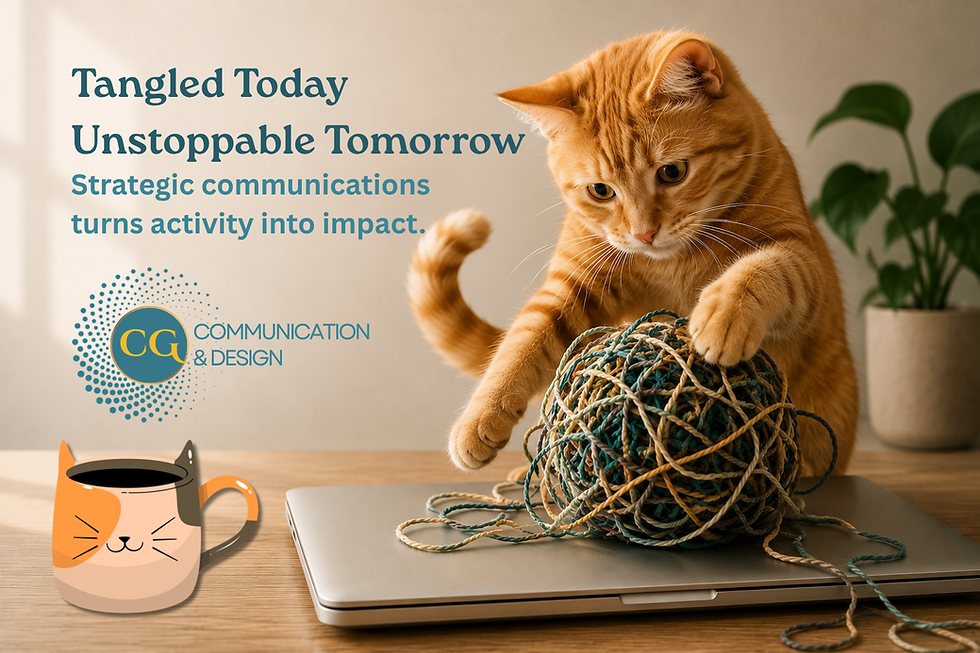
For many growing organizations, communications starts out as something everyone helps with. The executive director writes the newsletter. Someone on the administrative team schedules social media posts. A program manager updates the website when they have time. Maybe a volunteer makes graphics, a board member knows someone who can help with PR, and the CEO jumps in whenever something important needs to go out.
For a while, that can work. But as an organization grows, so does the complexity of communicating about it. There are more audiences to reach, more programs or services to promote, more channels to manage, more opportunities to pursue and more pressure to demonstrate results. What once felt like an efficient way to keep communications costs down can quietly become an expensive operational problem.
The issue isn't that your team isn't capable. In fact, the opposite is often true. The people handling communications are frequently talented, committed people who are doing their best to fit one more responsibility into already-full roles.
The problem is that communications has become a function of the organization without anyone actually having the capacity to lead that function. And that has costs that don't necessarily appear as a line item in your budget.
DIY Communications Aren't Actually Free
When organizations think about the cost of communications, they tend to think about money spent on agencies, consultants, software, advertising or staff. What is much harder to see is the value of the time already being spent internally.
If your executive director spends three hours writing and revising an email campaign, those three hours have a cost. If a program director loses half a morning figuring out what to post on social media, that has a cost. If five people spend part of a meeting debating the wording of a flyer because there isn't a clear messaging framework, that has a cost, too.
Those hours are being taken from fundraising, program development, partnerships, operations, leadership and other work that may be far more valuable for the organization.
In other words, your communications aren't free simply because you aren't paying someone specifically to manage them. You're often paying for them with your most expensive—and most limited—resource: your team's time.
The Bigger Cost Is Fragmentation
Time isn't the only hidden expense. When communications responsibilities are scattered across several people, the work itself tends to become fragmented. One person manages social media. Someone else writes emails. Another person updates the website. Leadership handles major announcements. A contractor designs something when needed. Each individual task may get completed, but no one is necessarily looking across all of those channels and asking whether they are telling the same story, reaching the right audiences or moving toward the same organizational goals.
That's when communications becomes a collection of activities instead of a strategy.
Your social media may be active without driving meaningful engagement. Your website may describe your organization differently from your fundraising materials. Your email campaigns may go out regularly without a clear path from reader interest to action. A great story from your programs may appear once on Facebook when it could have become a donor email, media pitch, website story, LinkedIn post and piece of impact reporting. The organization is communicating constantly, but the individual pieces aren't working together.
The Opportunity Cost Is Even Harder to See
Some of the most expensive communications problems are things that never happen.
The media opportunity nobody pursued. The partnership that wasn't nurtured. The donor who visited the website but couldn't quickly understand the organization's impact. The prospective customer who encountered three different descriptions of what the company does. The campaign that could have performed significantly better with stronger positioning. The thought-leadership opportunity leadership never had time to develop.
These don't show up on a spreadsheet as communications losses. They simply disappear.
That's why organizations can spend years believing their communications are "fine" while simultaneously wondering why awareness isn't growing, engagement remains inconsistent or marketing efforts don't seem to translate into meaningful results.
The problem may not be effort. Your team may be putting enormous effort into communications. The problem may be that nobody has the time and responsibility to connect that effort to a larger strategy.
The Leadership Bottleneck
One of the clearest signs that an organization has outgrown DIY communications is when leadership becomes the communications department by default. This happens constantly in small and midsize organizations. Because the executive director, founder or CEO understands the organization best, everything eventually flows back to them. They write the important messages. They approve the social posts. They rewrite the website copy. They decide what gets promoted. They respond when something urgent happens.
At first, that level of involvement can protect the organization's voice and mission. Eventually, however, it creates a bottleneck. Communications slows down because leadership has to touch everything. Opportunities are missed because there isn't time to pursue them. Strategic work gets postponed because urgent production work keeps taking priority. And perhaps most importantly, the person who should be thinking about where the organization is going is spending too much time figuring out what Tuesday's newsletter should say. That isn't a leadership failure. It's a capacity problem.
Hiring Another Person Isn't Always the Answer
Recognizing that DIY communications isn't working doesn't automatically mean hiring a full-time communications director. For many organizations, particularly nonprofits, growing businesses and mission-driven organizations, a senior communications hire may be difficult to justify financially. At the same time, hiring a junior marketing coordinator may solve the production problem without solving the strategy problem.
That's the gap a fractional communications director, strategic communications consultant or outsourced communications team can fill. Instead of adding another employee who needs to be managed, organizations can bring in senior communications leadership at a fraction of the cost of building an equivalent internal department. A strategic communications partner can establish priorities, clarify messaging, create systems, coordinate execution and ensure that the different pieces of communications actually reinforce one another.
The goal isn't simply to produce more content. It's to make the communications you're already investing in work harder.
What Strategic Communications Support Should Actually Change
A strong communications partnership should create more than deliverables. It should create clarity. Leadership should know what the organization is trying to communicate and why. Staff shouldn't have to reinvent messaging every time they write something. Campaigns should connect to organizational objectives. Content should be reusable across channels rather than created once and forgotten. Opportunities should be identified proactively instead of pursued only when someone happens to notice them.
Most importantly, communications should stop feeling like an endless collection of tasks that somebody needs to remember to do. The organization should have a strategy, a system and someone responsible for keeping both moving. That's the difference between doing communications and having a communications function.
How Do You Know When You've Outgrown DIY Communications?
The transition usually doesn't happen at a particular revenue level or staff size. It happens when the organization's communications needs become greater than the capacity available to manage them strategically.
You may have reached that point if communications repeatedly falls to leadership, your messaging changes depending on who is writing it, campaigns are frequently created at the last minute, your team produces content without knowing whether it contributes to measurable goals, or important opportunities are being missed simply because nobody has time to pursue them.
Another strong indicator is something we hear frequently from growing organizations: "We're doing a lot, but we're not sure what's actually working." That's usually not a sign that you need to do more. It's a sign that it's time to create a strategy around what you're already doing.
Key Takeaways
DIY communications aren't free. When senior leaders and program staff handle communications, you're paying for that work with valuable staff time that could be spent elsewhere.
Activity isn't the same as strategy. Posting regularly, sending newsletters and updating a website can create the appearance of a communications program without necessarily advancing organizational goals.
Fragmentation creates hidden losses. When different people manage different channels without an overarching strategy, messaging becomes inconsistent and opportunities to amplify content are easily missed.
Leadership shouldn't be the communications bottleneck. If your executive director, CEO or founder has to write, review or approve nearly everything, the organization has probably outgrown its current system.
You may not need another full-time employee. Fractional communications leadership or an outsourced communications team can provide senior strategy and execution without the cost and infrastructure of building an internal department.
The goal isn't more communication. It's more effective communication. The right strategy helps the work you're already doing produce better results.
Frequently Asked Questions
What is outsourced communications?
Outsourced communications means partnering with an external professional or team to manage some or all of an organization's communications function. Depending on the organization, that can include communications strategy, messaging and positioning, content strategy, email marketing, social media, public relations, campaigns, website content, executive communications and performance measurement. The strongest outsourced communications partnerships function as an extension of the internal team rather than simply completing isolated assignments.
What does a fractional communications director do?
A fractional communications director provides senior-level communications leadership on a part-time or outsourced basis. Rather than hiring a full-time communications executive, an organization gains access to strategic expertise for a portion of the cost. A fractional communications director may develop communications strategy, oversee messaging, prioritize campaigns, coordinate internal and external resources, establish workflows and metrics, and help ensure communications support the organization's broader goals.
When should a nonprofit outsource communications?
A nonprofit may benefit from outsourced communications when communications responsibilities are spread across multiple staff members, leadership is spending significant time producing or approving content, messaging is inconsistent, fundraising and program communications aren't well integrated, or the organization is missing opportunities because internal staff lack capacity. Outsourcing can be particularly valuable when a nonprofit needs experienced strategic leadership but isn't ready to hire a full-time communications director.
Is it better to hire a communications employee or an agency?
It depends on the organization's needs, budget and existing team. A full-time employee can make sense when there is enough consistent work to justify the role and the organization has the resources to hire at the appropriate level. An agency, consultant or fractional communications partner can make more sense when the organization needs access to multiple skill sets, senior strategy or flexible capacity without adding another full-time salary and associated overhead.
How much does strategic communications consulting cost?
Strategic communications consulting costs vary significantly depending on the scope of work, level of expertise and amount of execution involved. Organizations should evaluate the investment against both the cost of building equivalent expertise internally and the hidden cost of having senior staff spend substantial time managing communications themselves. The more useful question is often not simply, "What does communications support cost?" but "What is our current approach already costing us?"
Stop Doing More. Start Making It Work Together
If your team is already communicating constantly but still feels behind, the answer may not be another platform, another campaign or another item on someone's to-do list.
It may be time to build the strategy and infrastructure that makes all of those efforts work together.
At CG Communication & Design, we partner with nonprofits, mission-driven organizations and growing businesses that need experienced communications leadership without building an entire internal department. We help organizations clarify their message, identify the right opportunities, build smarter communications systems and turn scattered efforts into a cohesive strategy designed to support growth and impact.
If you're wondering whether your organization has outgrown DIY communications, let's talk. Sometimes the first step isn't doing more. It's figuring out what you can finally stop doing yourself.
Ready to Get Communications Off Your Plate?
If your team is doing plenty of communicating but no one has the time to step back, connect the pieces and make sure it’s actually working, you don’t necessarily need to hire another full-time employee. You may just need the right partner.
CG Communication & Design provides strategic communications leadership and hands-on execution for nonprofits, mission-driven organizations and growing businesses that need senior-level expertise without the cost of building an in-house communications department.
Let’s take a look at what’s on your plate, what’s working, what isn’t—and what you shouldn’t have to keep doing yourself.





Comments